Black Mould in Houses: How to Spot It and Check a Home Is Clear
By Manuel R.6 min read
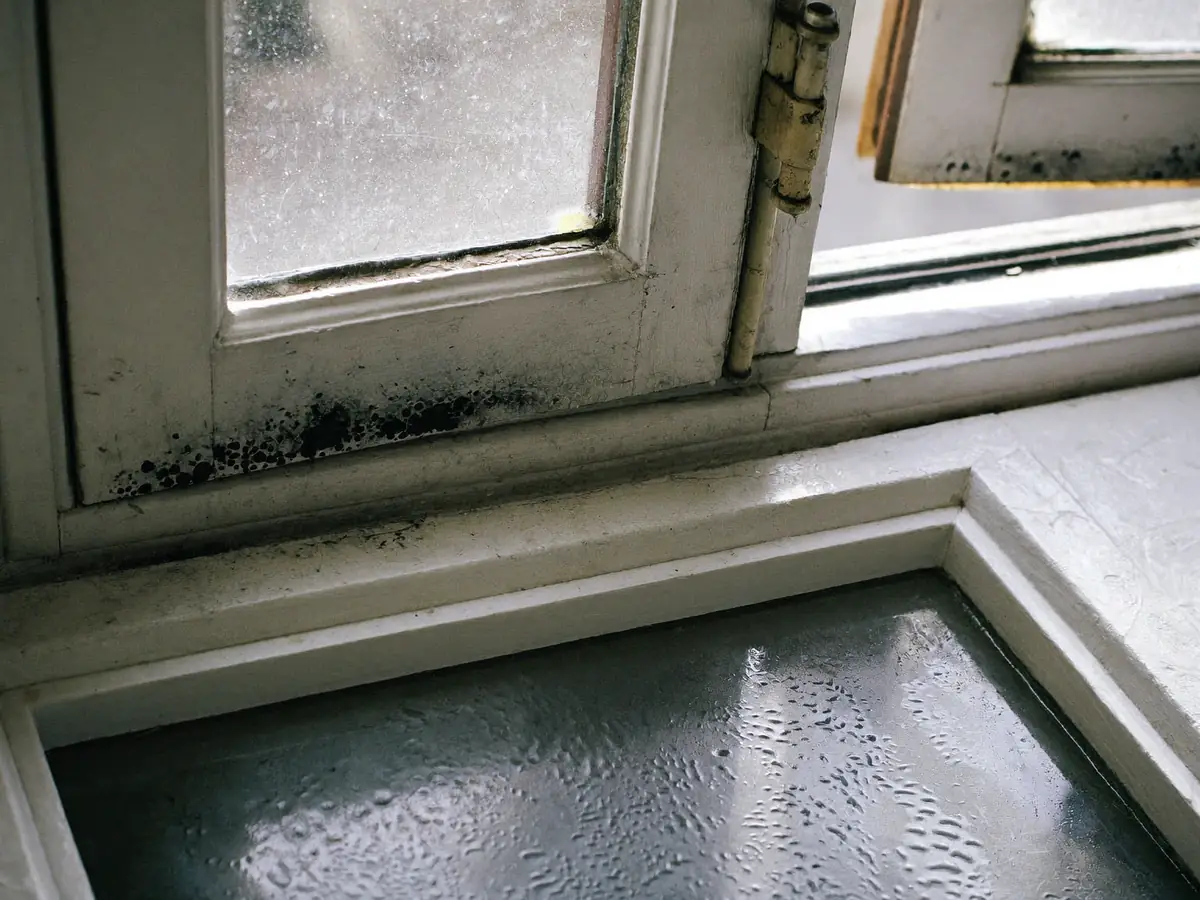
When a buyer smells damp in a Porto flat, the next question is usually the same: is that black mould? The short answer is that the colour matters less than the moisture feeding it. Here is how I look at it, and how I check that a house is clear before you buy.
What “black mould” actually is
“Black mould” (spelt “black mold” in the US) is the everyday name for dark moulds growing indoors. It is often linked to one species, Stachybotrys chartarum, but colour does not identify a species. Many different moulds look black, green or grey, and only laboratory analysis can name one. In practice, you treat them all the same way: find the damp, fix it, then clean.
Mould needs three things: moisture, something to feed on (paint, plaster, wallpaper, wood, dust) and time. Take away the moisture and it stops. That is why “is it black mould?” is the wrong first question. “Why is the wall wet?” is the right one.
Why homes in Porto get it
- Atlantic humidity. Mild, wet winters keep the air and the walls damp for months.
- Old granite and masonry walls without a damp-proof course, which pull moisture up from the ground.
- Cold bridges. Corners, window reveals and external walls that stay cold collect condensation overnight.
- Windows replaced, ventilation forgotten. Tight new windows trap the moisture that old draughty ones let out.
- Bathrooms and kitchens without extraction. A daily shower puts litres of water into the air.
- Flat terraces and roofs with ageing waterproofing, which leak slowly into the ceiling below.
- Empty homes. Second homes and holiday lets that stay shut for weeks have no airflow at all.
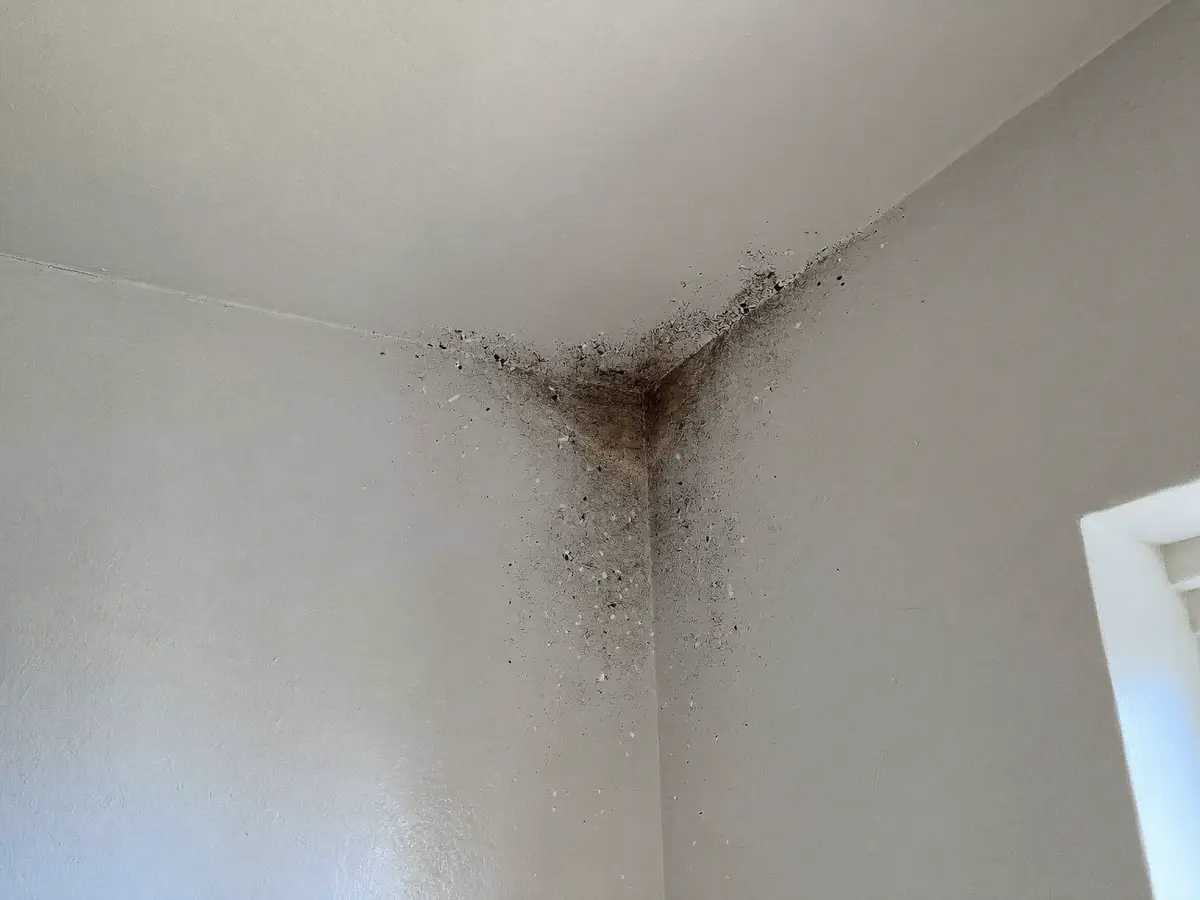
Where it hides
- Ceiling corners, above showers and baths, and around extractor grilles
- The bottom of window frames, the silicone on the sill and the reveals
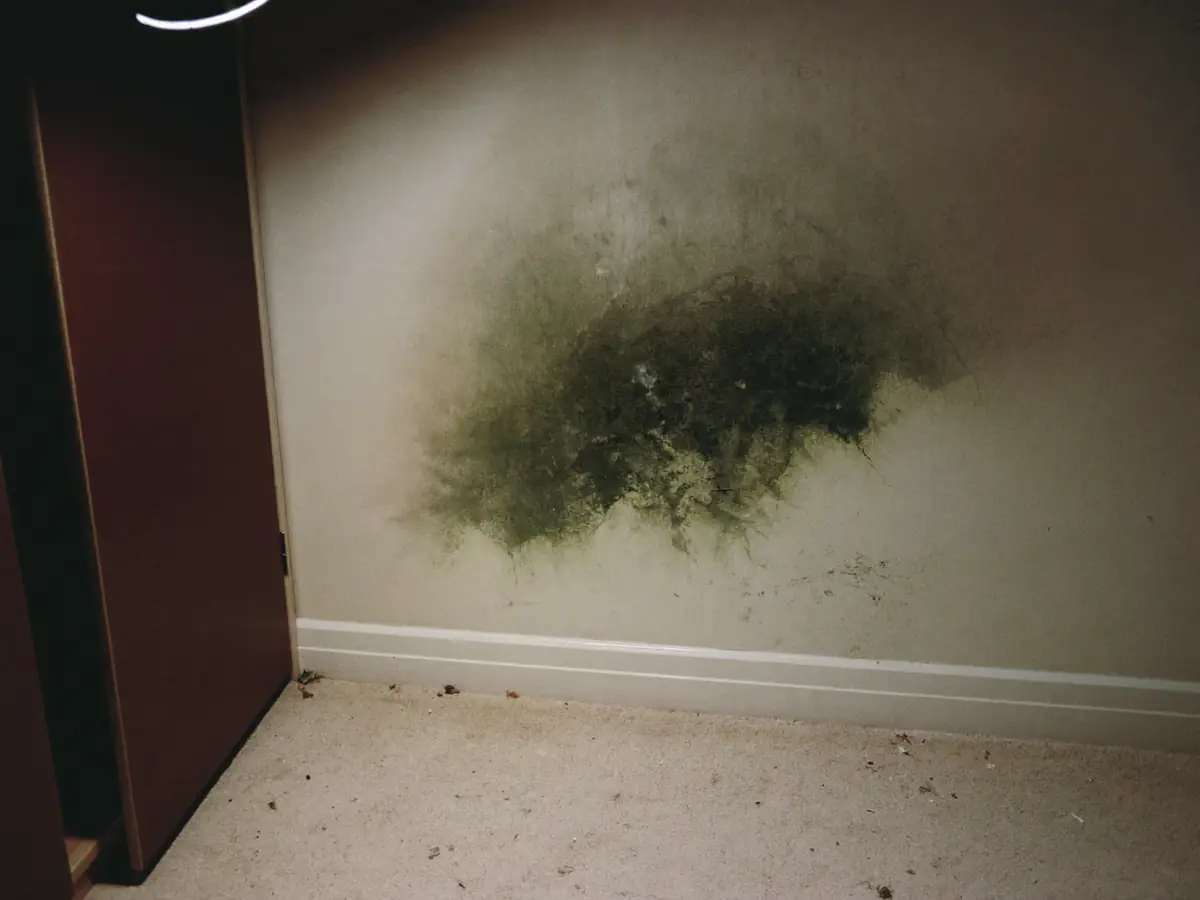
- Behind wardrobes, beds and sofas pushed against external walls
- Inside wardrobes on cold walls, and around the bottom of door frames
- Under sinks and around pipes where a slow leak keeps things damp
- Lofts, basements and rooms that are rarely opened
What to check at a viewing
- Smell the room when you walk in. A musty smell is a signal even if you see nothing.
- Look at the ceiling corners and the window frames, not only the walls.
- Ask to move a wardrobe or pull back a curtain on an external wall.
- Notice fresh paint low on a wall, or one wall painted when the others are not.
- Look for a dehumidifier, strong air freshener or windows left open in winter. They can be a sign.
- Press the paint near the skirting. Bubbling, flaking or a powdery white deposit points to damp.
Is black mould a health risk?
It can be. The World Health Organization reviewed the evidence and links indoor dampness and mould to respiratory symptoms, allergies and asthma (WHO guidelines on dampness and mould). People with asthma, allergies, young children and people with weakened immunity are the most affected. The colour of the mould does not tell you how harmful it is. If someone in the home is unwell, speak to a doctor as well as dealing with the damp.
How to confirm a house is mould-free
First, the honest part: no inspection can prove there is no mould anywhere in a building. Mould can grow inside walls, under floors and behind fitted furniture where nobody can see it. What a good inspection can do is look for the mould, and for the moisture it needs, in every accessible place, and tell you exactly what was found. Here is how we do it on a black mould inspection:
- Look where mould hides. Ceiling corners, window reveals, wet rooms, behind wardrobes and beds on external walls, under sinks, in lofts and basements. We photograph what we find and what we could not reach.
- Measure the moisture. A moisture meter at the same spots, so a dry wall is a reading and not an impression.
- Scan with thermal imaging. An infrared camera shows cold and wet patches behind paint, plaster, tiles and fitted furniture.
- Judge the cause. Ventilation, heating, leaks and how the home is used. No source of damp means far less chance of mould.
- Test, if it matters. If you need proof for your health, a claim or a sale, mould testing can be added to the inspection.
What the report can say
A clear report says something like: “No visible mould and no active moisture found in the areas we could access on the day.” That is a real, useful statement. It is not a guarantee about the inside of walls, and a good inspector will tell you where hidden mould is still possible and whether it is worth opening something up.
If you find black mould
- Do not panic, and do not scrub or sand large areas. That spreads spores.
- Find and fix the source of the moisture first. Cleaning without fixing the cause is a short-term fix.
- Painting over it, or using stain-blocking paint alone, does not solve it.
- Photograph it and keep records, especially if you are buying, renting or making a claim.
- Use it in negotiation. A moisture problem is a real repair cost, and a buyer is entitled to price it.
Black mould: common questions
Is black mould always Stachybotrys?
No. Several moulds look black. Colour alone does not identify the species, and only laboratory analysis can. You deal with all of them the same way: find the damp, fix it, then clean.
How do I know if a house has mould before buying?
Look for visible growth, smell the rooms, check ceiling corners, window frames and behind furniture, and measure the moisture. A pre-purchase inspection checks for damp throughout, and a black mould inspection goes deeper with moisture readings and thermal imaging.
Can an inspection guarantee a house is mould-free?
No honest inspector can guarantee that. A good report says what was visible and measurable in the accessible areas on the day, and flags where hidden mould is still possible.
Can thermal imaging see mould?
Not mould itself. It shows temperature differences that can point to moisture behind a surface. We confirm with a moisture meter and with what can be seen.
Is mould a reason to walk away from a purchase?
Not on its own. It tells you there is, or was, a moisture problem. The cause and the cost of fixing it decide whether it is a deal-breaker or a negotiating point.
Is it safe to live with black mould?
It is best not to. Damp and mould are linked to respiratory symptoms, allergies and asthma. Fix the cause, and see a doctor if anyone in the home is unwell.
At Oporto Home Inspections we inspect homes across Porto, Vila Nova de Gaia and the North for buyers who want the truth about a property, not the sales version. Inspect with confidence.